

If you are still hand-rolling pre-rolls in 2026, you are not running a craft operation—you are running a bottleneck. And that bottleneck is costing you more than you probably realize.
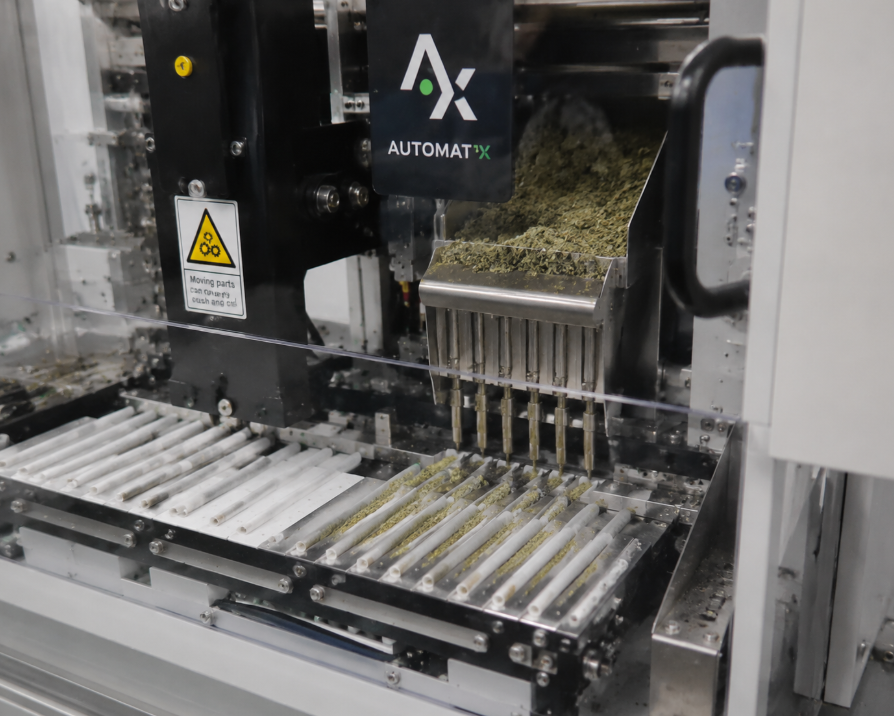
Let us start with the numbers that actually matter. A skilled hand packer can produce roughly 100 to 120 pre-rolls per hour. On a good day, with a clean setup and no distractions, that number might push to 150. Now compare that to an automated system like the Hefestus AuraX: same operator, same product, but output jumps to 1,000 to 1,100 pre-rolls per hour. The math is brutal. If you are paying that operator $20 an hour, your labor cost per hand-rolled pre-roll is 20 cents. Put that same person on a machine, and the cost drops to 2 cents per pre-roll. That is a 90 percent reduction in labor cost per unit—not theoretical, not aspirational, but actual money back in your pocket.
But throughput is only half the story.
The real labor savings come from how many people you no longer need on the floor. One industry observer put it bluntly: you do not need 30 people rolling joints when 3 people and a machine can do it better. Many operators report labor reductions of 50 to 70 percent within the first month of automation. A process that once required 10 people can now be managed by 2 or 3 operators overseeing the equipment. Fewer people run the line. Shifts shorten. Training becomes easier.
And then there is the waste you are not even counting.
Manual filling depends on feel. Even skilled workers vary. To protect label weight, teams often overpack. In manual environments, overfill typically runs 3 to 6 percent. On a 1-gram pre-roll selling wholesale for $2.50, a 0.05-gram giveaway costs $0.125 per unit. At 500,000 units, that is $62,500 in flower you are literally giving away—every year. Automated systems dial in consistent fill weights, and that waste disappears.
The other hidden labor cost is rework. If your line loses 50 minutes to jams, resets, and rejects, you lose about 10 percent of the shift—roughly 4.8 labor hours gone. At $24 per hour fully loaded, that is $115 burned in a single day, just in labor. Add missed shipments and compliance failures, and the cost multiplies fast.
So how fast does the machine pay for itself?
A pre-roll machine typically pays back within 3 to 12 months, depending on volume. Small-batch operations see payback in 9 to 12 months; mid-size in 6 to 9; high-volume in 3 to 6. Some modular systems can pay back in mere weeks. One case study showed a $24,995 machine saving $3,575 per month in labor alone—a payback period of about 7 months. Another operator reported that reducing labor by 75 percent more than paid for the machine on a monthly basis.
The question is not whether you can afford a pre-roll machine. The question is whether you can afford not to have one. Because while you are paying 20 cents per joint in labor, your competitor with automation is paying 2 cents—and they are using that margin to take your shelf space.
Let us start with the numbers that actually matter. A skilled hand packer can produce roughly 100 to 120 pre-rolls per hour. On a good day, with a clean setup and no distractions, that number might push to 150. Now compare that to an automated system like the Hefestus AuraX: same operator, same product, but output jumps to 1,000 to 1,100 pre-rolls per hour. The math is brutal. If you are paying that operator $20 an hour, your labor cost per hand-rolled pre-roll is 20 cents. Put that same person on a machine, and the cost drops to 2 cents per pre-roll. That is a 90 percent reduction in labor cost per unit—not theoretical, not aspirational, but actual money back in your pocket.
But throughput is only half the story.
The real labor savings come from how many people you no longer need on the floor. One industry observer put it bluntly: you do not need 30 people rolling joints when 3 people and a machine can do it better. Many operators report labor reductions of 50 to 70 percent within the first month of automation. A process that once required 10 people can now be managed by 2 or 3 operators overseeing the equipment. Fewer people run the line. Shifts shorten. Training becomes easier.
Let us put real dollars on it. Assume a manual rolling line with six employees working two 8-hour shifts at $18 per hour plus 20 percent burden—that is $21.60 per employee per hour. Daily labor cost: $2,073.60. Monthly: $45,619. Now switch to a pre-roll machine setup running with three operators per shift. Daily labor cost drops to $1,036.80. Monthly: $22,809. That is **$22,810 saved every single month**—$273,720 annually—from the same production volume. If you reduce headcount by five employees at an average cost of $40,000 per year each, you are looking at $200,000 in annual savings.
And then there is the waste you are not even counting.
Manual filling depends on feel. Even skilled workers vary. To protect label weight, teams often overpack. In manual environments, overfill typically runs 3 to 6 percent. On a 1-gram pre-roll selling wholesale for $2.50, a 0.05-gram giveaway costs $0.125 per unit. At 500,000 units, that is $62,500 in flower you are literally giving away—every year. Automated systems dial in consistent fill weights, and that waste disappears.
The other hidden labor cost is rework. If your line loses 50 minutes to jams, resets, and rejects, you lose about 10 percent of the shift—roughly 4.8 labor hours gone. At $24 per hour fully loaded, that is $115 burned in a single day, just in labor. Add missed shipments and compliance failures, and the cost multiplies fast.
So how fast does the machine pay for itself?
A pre-roll machine typically pays back within 3 to 12 months, depending on volume. Small-batch operations see payback in 9 to 12 months; mid-size in 6 to 9; high-volume in 3 to 6. Some modular systems can pay back in mere weeks. One case study showed a $24,995 machine saving $3,575 per month in labor alone—a payback period of about 7 months. Another operator reported that reducing labor by 75 percent more than paid for the machine on a monthly basis.
The question is not whether you can afford a pre-roll machine. The question is whether you can afford not to have one. Because while you are paying 20 cents per joint in labor, your competitor with automation is paying 2 cents—and they are using that margin to take your shelf space.
You May Also Like
Get a Quote
If you have any enquiry about quotation or cooperation,please feel free to email us at saleteam@xinhua-intelligent.com or use the following enquiry form.
Our sales will contact you within 24 hours. Thank you for your interest in our products.